
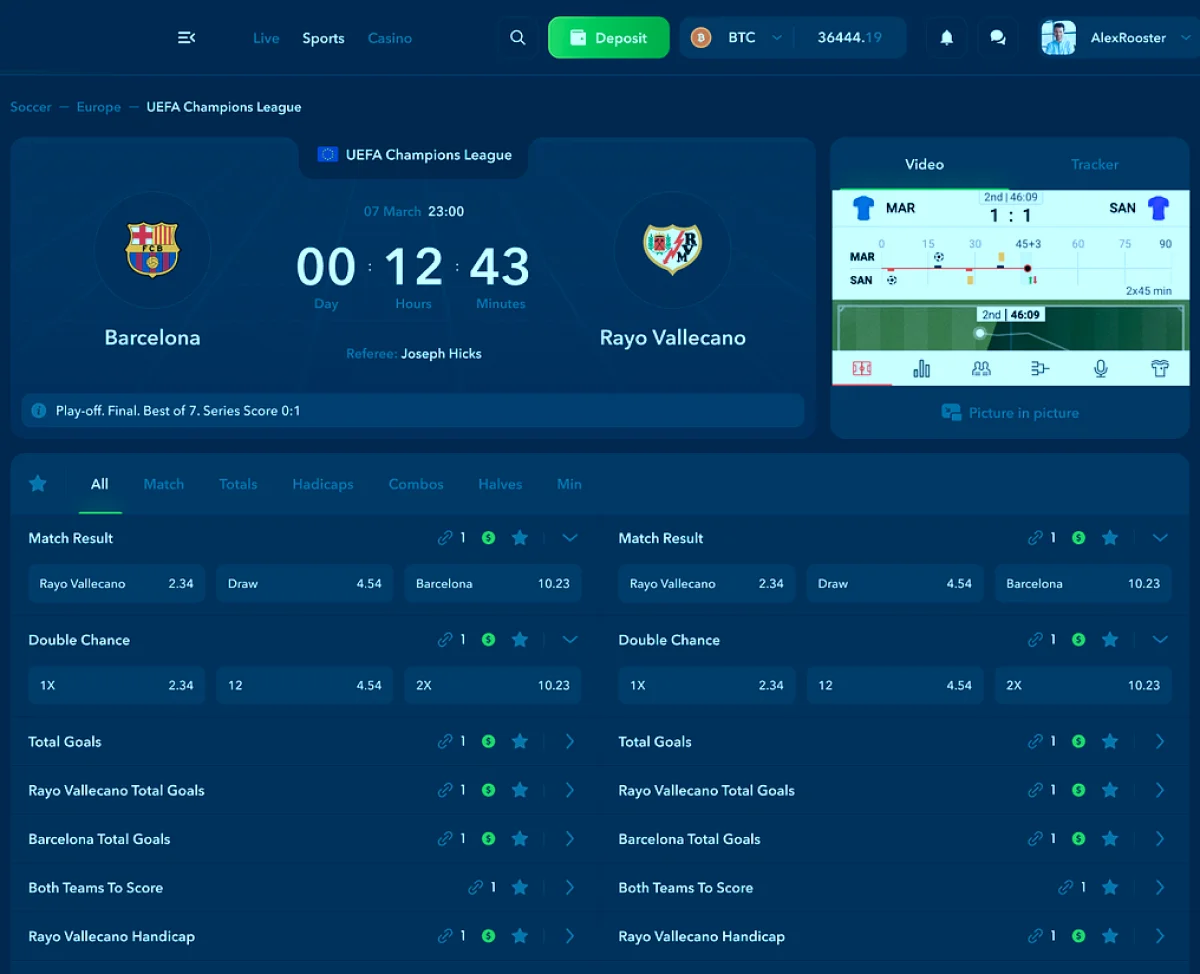
Let’s be honest—the world of sports betting has always had a bit of a backroom feel. You know, handing cash to a bookie, trusting a faceless offshore site with your bank details, and crossing your fingers that your winnings actually show up. It’s a system built on layers of middlemen and, frankly, trust.
But what if you could cut out the middleman entirely? That’s the promise—the really compelling promise—happening right now at the intersection of cryptocurrency and decentralized sports betting platforms. It’s not just a new way to place a bet; it’s a fundamental reimagining of the entire game.
Why Traditional Betting is Crying Out for Disruption
First, let’s look at the pain points. Centralized sportsbooks, whether online or physical, act as gatekeepers. They set the odds, they hold all the funds, and they control the payout process. This creates a few, well, friction points:
- High Fees & Slow Payouts: Withdrawal times can be days, and transaction fees eat into your profits.
- Geographic Restrictions: Your location often dictates which (if any) platform you can use.
- Opacity: How are odds truly set? Can you be sure the “house” isn’t manipulating things behind the curtain?
- Censorship & Seizure Risk: Accounts can be frozen, funds can be held. You’re not in full control.
Enter blockchain technology. Think of it not just as “crypto money,” but as a public, immutable ledger—a digital record book that everyone can see but no single entity controls. This is the engine for decentralization.
The Core Mechanics: How Crypto and Decentralization Change the Game
So, how does a decentralized sportsbook actually work? Here’s the deal: instead of a company running the show, the platform operates on smart contracts. These are self-executing pieces of code on the blockchain that automatically enforce the rules.
You want to bet on the big game? You lock your crypto (like Ethereum, SOL, or a stablecoin) into a smart contract. The odds might be set by a decentralized oracle—a service that feeds real-world game data onto the blockchain. When the game ends, the smart contract automatically pays the winners. No human approval needed. No delay.
Key Benefits You Actually Feel
The theory is cool, but the practical benefits are what matter. And they’re tangible.
| Feature | Traditional Platform | Decentralized (Crypto) Platform |
| Transaction Speed | Days for withdrawals | Minutes, 24/7 |
| Anonymity & Access | KYC checks, geo-blocks | Pseudonymous, global access* |
| FeesVarious house cuts & bank fees | Primarily blockchain network gas fees | |
| Provably Fair | Trust-based | Verifiable on-chain |
| Custody of Funds | Held by the platform | You hold until contract executes |
*It’s worth a quick pause here. Global access is a double-edged sword. You have to be acutely aware of your local laws—decentralization doesn’t magically make something legal where it’s prohibited. But it does enable the technical possibility.
The Not-So-Simple Challenges on the Field
This isn’t all smooth sailing, of course. The technology is still, let’s say, in its early seasons. The user experience can be clunky. Connecting a wallet, managing private keys, understanding gas fees—it’s a barrier for the average fan.
Then there’s volatility. Betting with a highly volatile cryptocurrency adds a layer of risk on top of the bet itself. That’s why many platforms are leaning heavily into stablecoins—crypto pegged to the US dollar—to provide a steadier experience.
And perhaps the biggest hurdle? Liquidity. A betting market needs lots of money on all sides to function well. Building that liquidity pool from scratch, in a decentralized way, is a massive challenge. Some platforms use “liquidity provider” incentives, rewarding users who stake their crypto to fuel the betting markets.
A New Player Emerges: The Bettor as the House
Here’s where it gets fascinating. In some decentralized models, you’re not just a bettor. You can become part of the “house” by providing liquidity to a betting pool. You earn a share of the fees generated by the platform’s activity. This shifts the dynamic from a pure customer-company relationship to a user-participant ecosystem. It’s a bit like being a mini-shareholder in the very casino you’re playing at.
Looking Downfield: The Future of Decentralized Sports Betting
The trajectory here points toward deeper integration. We’re starting to see the seeds of “Web3 sports.” Imagine owning a unique digital collectible (an NFT) of a star player that gives you better odds on their performance. Or participating in a betting pool governed by a DAO—a Decentralized Autonomous Organization—where token holders vote on everything from featured sports to fee structures.
Micro-betting—wagering on every single pitch, play, or possession—becomes technically trivial with smart contracts. The markets could be limitless, automated, and instant.
But the real endgame? It’s trust through transparency. When every bet, every odds shift, and every payout is recorded on a public blockchain, the age-old question of “Is this game rigged?” starts to fade. The code is law, and the law is visible for anyone to audit.
That said, the human element—the thrill, the community, the sheer fun of the game—remains. The technology doesn’t replace that; it just rebuilds the stadium around it. Without a central owner. The intersection of crypto and sports betting, then, is less about gambling and more about reclaiming agency. It’s about turning a passive activity into a participatory one. And honestly, that’s a future worth betting on.